

THE BUSINESS EDIT · 12 OCTOBER 2026
Small-Business Content That Generates Leads: A Practical Planning Guide
Plan small-business content around customer questions, proof and clear next steps. Includes an example weekly plan and a lead measurement checklist.
Posting every day is not a sales strategy by itself. Useful content answers the questions a customer asks before buying, shows credible evidence and leads to a relevant next step. This guide helps service businesses plan that journey without treating every post as a hard sell.
Request a free mini audit of mobile usability, your main CTA and three fixes. Send your website for a free mini audit →
Start with real buying questions
Collect questions from consultations, enquiries and customer conversations. Common categories include fit, scope, pricing, process, alternatives and what happens after purchase. Remove personal details before using customer questions in content.
A good question has a specific decision behind it. “What is a website audit?” helps someone understand a service; “What should I fix before paying for ads?” helps someone prioritise a problem. Give a useful answer even if the reader does not buy.
Action: list ten questions prospects ask before approving work.
Use three content roles: help, prove and invite
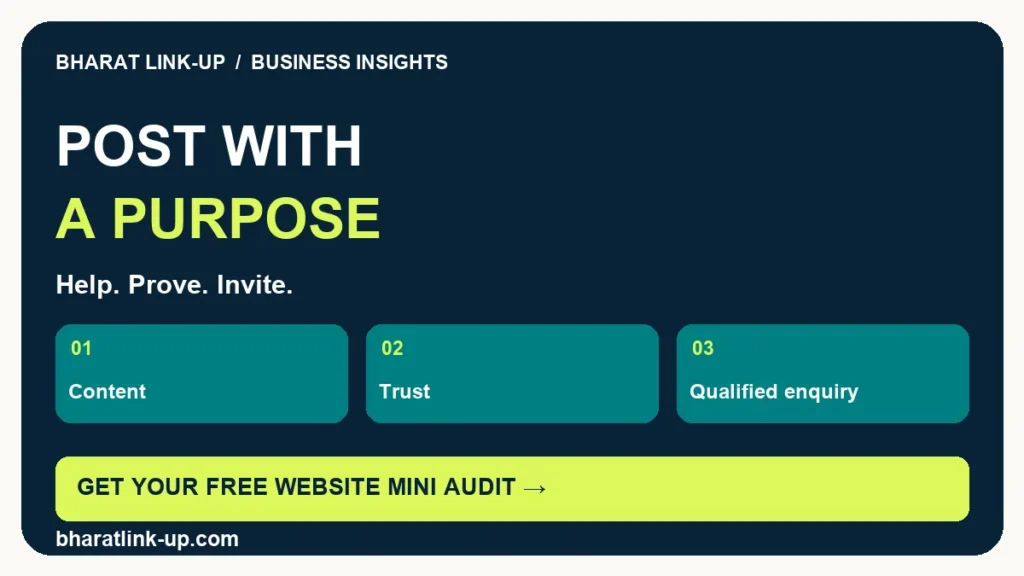
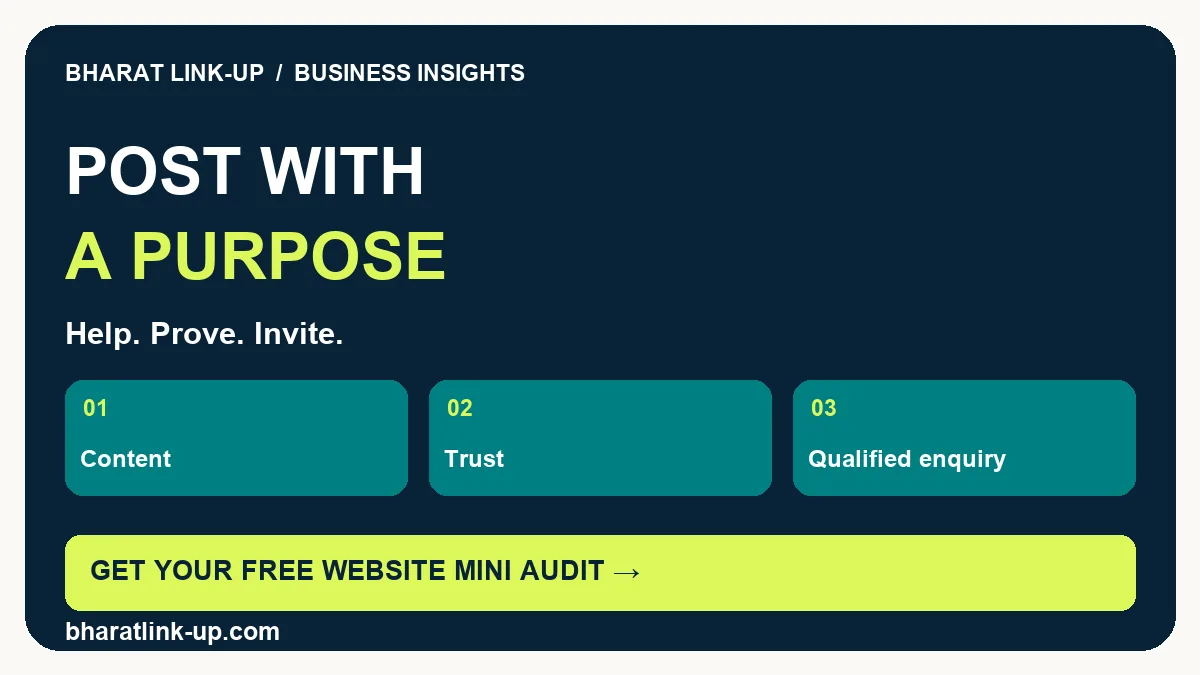
Helpful content explains a problem or task. Proof content shows relevant work, with accurate context. Invitation content explains the service and next step. A balanced plan connects these roles rather than repeating offers.
For example, teach how to inspect a mobile CTA, show a genuine approved example and invite readers to request a mini audit. Do not imply an illustrative design produced results that were never measured.
Action: label every planned post with its role and intended reader.
Create one detailed resource and adapt it
A substantial guide can become a carousel, a short text post and a Pinterest graphic, each useful in its own format. Adapt the opening and CTA to the platform instead of copying an identical block everywhere.
The website guide should contain the detail promised by the social post. Keep headings descriptive, examples concrete and images relevant to the explanation. Avoid publishing several near-identical articles merely to target slight keyword variations.
Action: choose one customer problem and build a complete guide before creating its distribution pieces.
Show proof without exaggerating
Use real deliverables and approved testimonials. Explain the starting situation, work completed and limits of the evidence. An outcome claim needs a documented basis and appropriate context.
If you lack a client case study, publish a clearly labelled demonstration or your own process. Honest examples are more useful than fabricated numbers or anonymous praise presented as a result.
Action: maintain a proof folder with permissions, original material and the wording you can support.
Give each piece a relevant next step
A CTA should follow naturally from the lesson. A troubleshooting article can invite a diagnostic; a planning guide can offer support implementing the plan. State the scope and any price clearly.
Avoid asking for a purchase before the visitor understands the service. Keep the destination consistent with the promise: a detailed guide, a relevant service section or an enquiry form with useful context.
Action: finish every content brief with the destination URL and the reason to visit it.
Plan a week around a single customer problem
Example week: Monday publish the guide; Tuesday share one useful checklist; Wednesday show a labelled example; Thursday answer a pricing or scope question; Friday explain the offer and who it suits. This is an illustrative plan, not a proven universal posting schedule.
Leave room for real questions and new evidence. Publishing frequency should reflect your ability to maintain quality, respond to enquiries and keep information current.
Action: use our linked content calendar to organise the sequence and responsibilities.
Measure qualified enquiries, not only impressions
Track reach and engagement as distribution signals, then measure website sessions, confirmed enquiries and relevant prospects. A high-reach post can be valuable without producing immediate sales; a smaller post may attract a better-fit customer.
Use consistent campaign links and comparable periods. Record the content topic and offer so you can distinguish channel issues from landing-page or service-fit issues.
Action: review which questions attracted useful conversations and build the next guide from that evidence.
Your practical next step
Write one buying question, one practical answer, one honest example and one relevant CTA. Turn these into a guide and three platform-specific posts. Review the resulting enquiries before increasing the publishing frequency.
For a posting framework, use our small-business content calendar. Review our service terms and refund policy before confirming paid work.
Frequently asked questions
What content brings leads to a small business?
Content that helps a relevant customer make a decision: problem-solving guides, scope explanations, genuine case examples and clear service invitations. No format guarantees leads.
How often should a small business post?
Choose a sustainable frequency that supports useful content and prompt follow-up. Daily posting is a capacity choice, not a ranking or sales requirement.
Should every post sell a service?
Every post can have a purpose without a hard sell. Teach, demonstrate and invite at appropriate stages of the customer journey.
How long does content take to produce sales?
There is no fixed timeline. Existing audience, search visibility, purchase cycle and distribution affect results. Track the journey and review comparable periods.
Related resources
Sources and editorial approach
These recommendations are practical editorial guidance, not a claim of measured conversion improvement. Examples are illustrative unless explicitly described otherwise. We used Nielsen Norman Group’s research on clear navigation cues, Google’s form design guidance and Core Web Vitals guidance for supporting principles. For search content, see Google’s people-first content guidance. No ranking or sales guarantee is offered.