
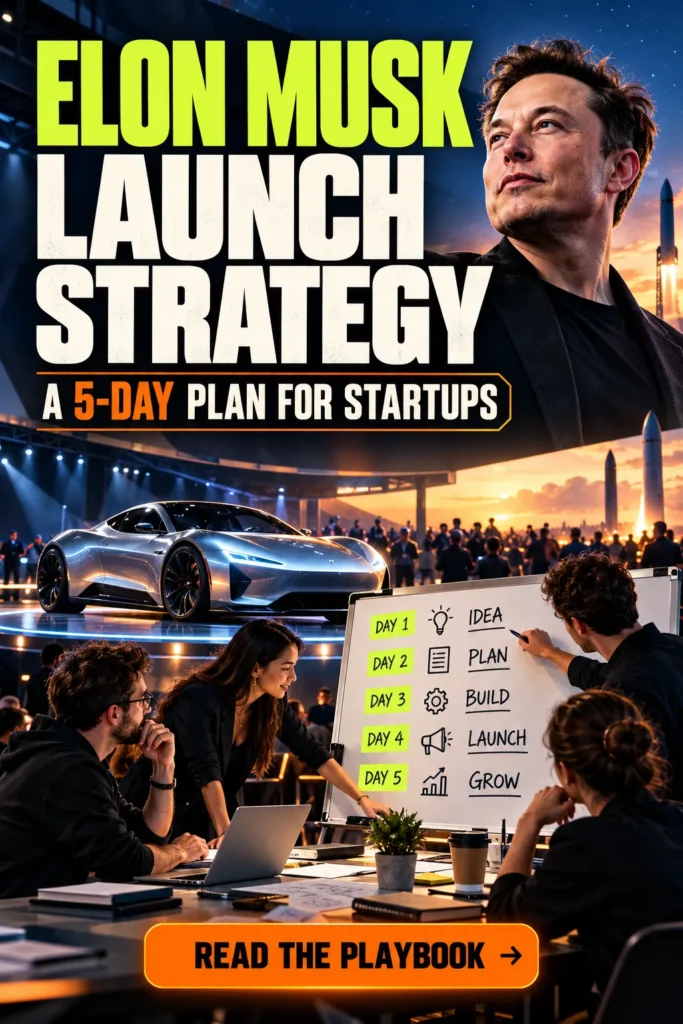
A successful launch does not begin on launch day. It begins when the right people recognise a problem, become curious about the solution and know exactly what to do when the offer appears.
Tesla and Elon Musk regularly attract attention before a product reaches customers. Small businesses cannot copy Tesla’s budget or celebrity reach, but they can use the same basic sequence: make the problem visible, demonstrate progress, build anticipation and direct interest to one useful page.
What is a product launch strategy?
A product launch strategy is the plan that connects audience research, pre-launch content, the main announcement and follow-up. It prevents a founder from posting once, receiving a few reactions and wondering why nobody bought.
The goal is not to manufacture hype. The goal is to help the right customer understand the problem, see credible evidence and take a clear next step.
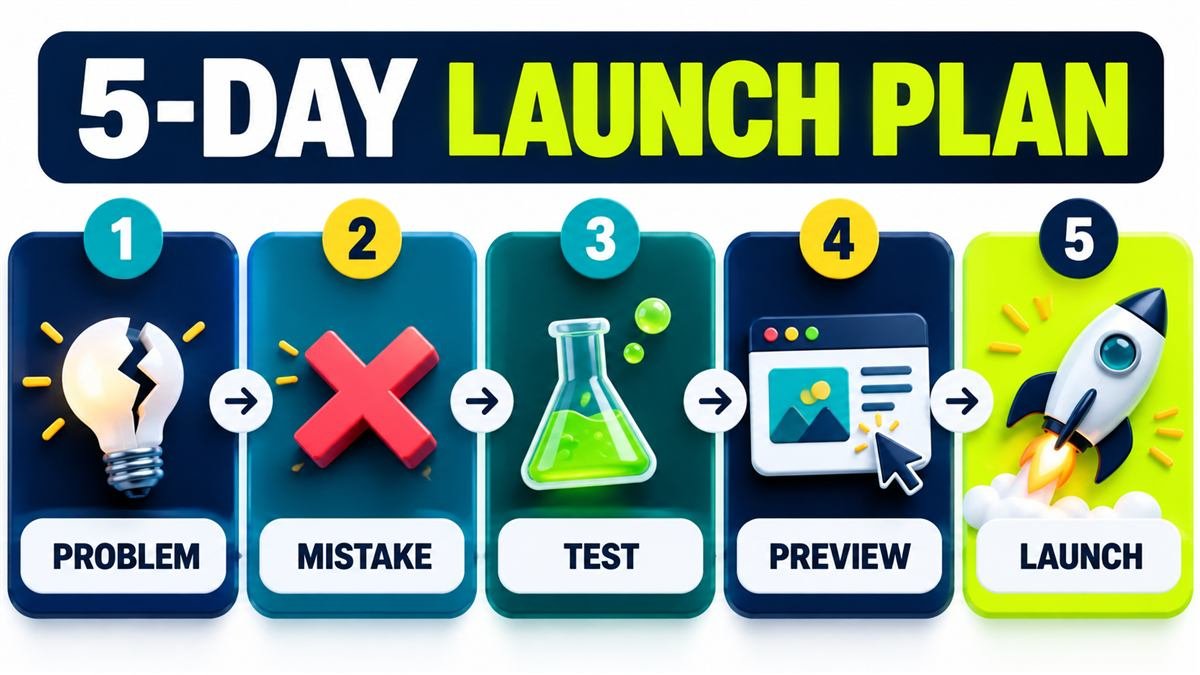
The five-day startup launch plan
Day 1: Name the customer problem
Describe one costly or frustrating problem in the customer’s own language. Avoid introducing the product immediately. A website studio might say: “Visitors are reaching your homepage, but they still cannot tell what you sell within five seconds.”
Template: If you are [specific customer] and [problem happens], check [one likely cause] before spending more on [expensive alternative].
Day 2: Show the common mistake
Use a screenshot, short video or diagram to demonstrate the mistake. Tesla’s strongest demonstrations work because viewers can see the claim rather than only hearing it. Your example can be much simpler: compare a confusing call-to-action with a clear one, or show a form failing on mobile.

Day 3: Share a behind-the-scenes test
Show how you are improving the offer. Include a real limitation or lesson. Founders build trust when audiences can see the decision-making process, not just the polished final announcement.
Template: We tested [method A] and [method B]. [A] helped with [result], but [B] worked better when [condition]. Here is what we changed.
Day 4: Reveal part of the solution
Give away one useful piece of the method: a checklist, template or diagnostic question. This makes the campaign useful before anyone purchases. It also gives people a reason to save or share the post.
Day 5: Launch with one clear action
Name the offer, intended customer, outcome, scope and next step. Do not divide attention between five links. If the service requires qualification, ask visitors to submit a short enquiry rather than promising an instant purchase.
Launch CTA template: If you are [audience] and want [specific outcome], use [resource or service]. You will receive [deliverable] within [honest timeline]. Start here: [one destination].
How Elon Musk creates launch anticipation
The useful lesson is the sequence. A surprising visual earns attention. A demonstration gives people something concrete to discuss. Public updates extend the story. The final destination explains what happens next.
Founders should also learn from the risk: anticipation can become distrust when the promise is unclear, exaggerated or repeatedly delayed. State what has been demonstrated, what remains planned and what the customer can receive now.
Turn launch attention into enquiries
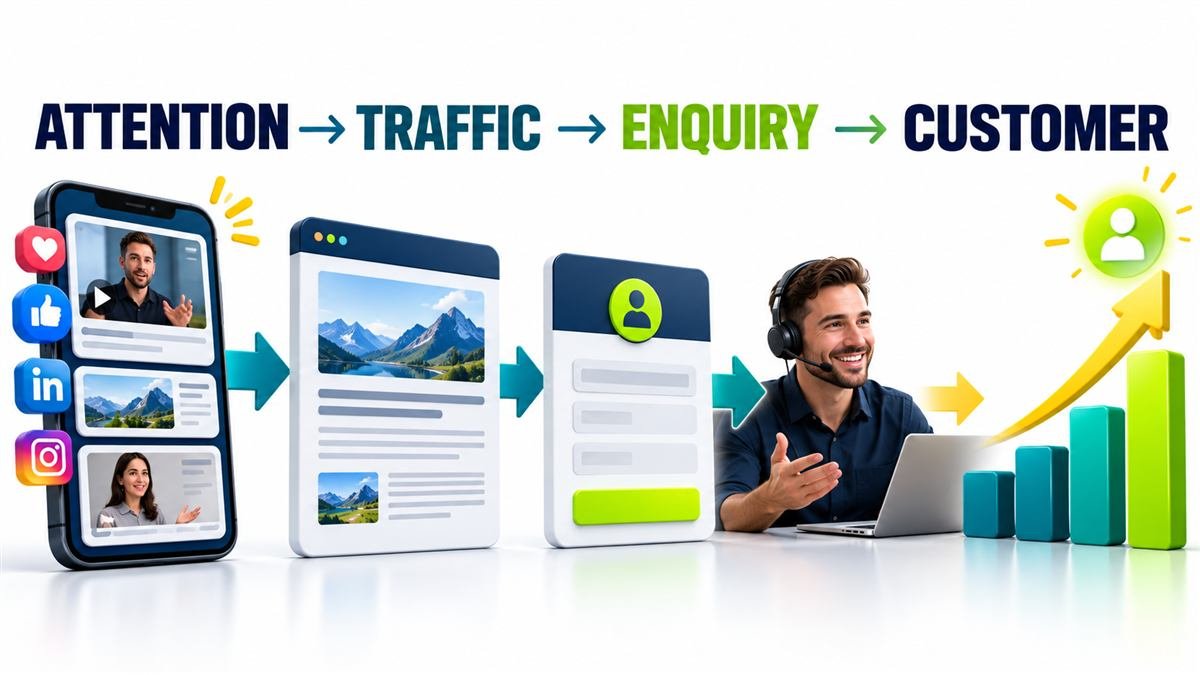
- Send every campaign post to the page that fulfils the same promise.
- Repeat the offer in one screen using plain language.
- Place relevant proof beside the claim it supports.
- Use a short form with only necessary fields.
- Track successful enquiries separately from views and link clicks.
- Respond while the customer’s need is still active.
Use our guide to diagnose why website visitors do not enquire, and compare it with our broader startup marketing lessons from Tesla’s flying Roadster.
Frequently asked questions
How early should a startup promote a launch?
Start when you have a real customer problem, a credible solution and something useful to show. A focused five-day sequence is enough for a small test; larger launches may need longer.
Can a new founder launch without followers?
Yes, but the first goal should be learning rather than instant virality. Share the campaign with relevant customers, communities and partners, then measure qualified visits and enquiries.
Should every pre-launch post mention the product?
No. Early posts can explain the problem, mistake or test. Each post should still connect naturally to the same customer need.
What should a product launch landing page include?
Include a clear offer, intended customer, believable proof, scope, timeline, price or enquiry process, frequently asked questions and one primary action.
Build your launch around a customer decision
Bharat Link-Up helps founders connect content, landing pages and enquiry tracking. Request a free website mini audit to identify where your launch journey may lose interested visitors.