
THE CREATOR RADAR · UPDATED 18 OCTOBER 2026
7 AI Business Ideas and Creator Opportunities to Test in 2026
Compare seven practical ideas by customer, skill, cost and first test—then use the seven-day plan to validate one before spending heavily.
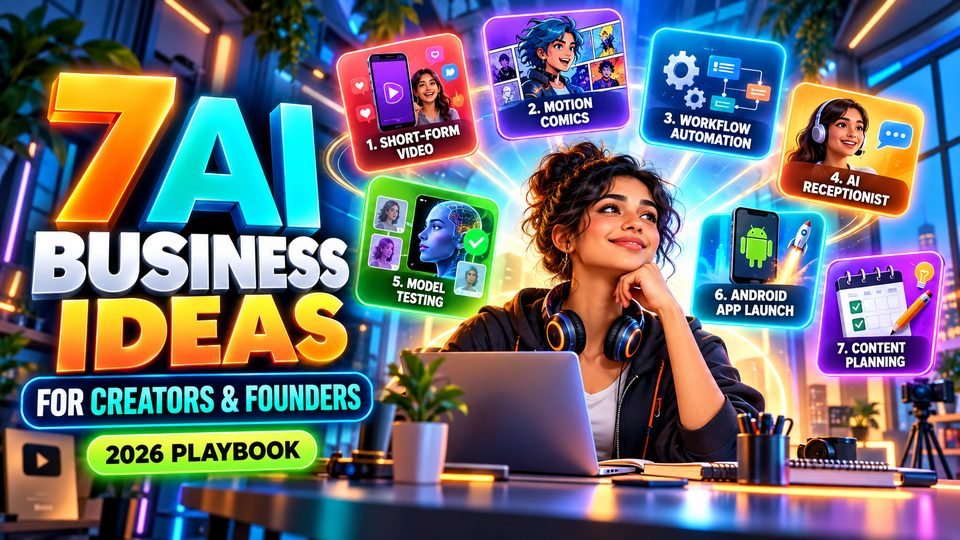
The best AI business idea for a new creator or founder is a small service built around a problem you already understand. This guide turns seven current AI platform and product signals into testable offers—from vertical-story production and workflow setup to AI receptionist pilots.
Each idea below identifies a possible customer, the skill required and a low-cost first test. The platform announcements are evidence of changing tools and formats; the business ideas are Bharat Link-Up’s interpretation. They do not guarantee income, access or customer demand.
Which AI business idea should a beginner choose? Start with content planning, short-form production or organising repeated customer enquiries because you can review the output yourself. Voice agents and open-weight models require more technical testing, infrastructure and support.
If your first experiment is content, use our free 30-day social media content calendar to plan the offer, proof posts and customer questions.
Seven AI business ideas and creator opportunities compared
| Business idea | Possible customer | Skill level | Starting cost | Low-cost first test |
|---|---|---|---|---|
| Motion-comic production | Writers and educators | Creative | Low | Produce one original three-scene pilot |
| Vertical microdrama studio | Local brands and creators | Creative | Low | Film one 45-second episode |
| AI workflow evaluation | Small service businesses | Technical | Medium | Compare one task across two models |
| Workflow implementation | Teams with repetitive admin | Intermediate | Low | Map one process and measure corrections |
| AI receptionist pilot | Clinics, salons and local services | Intermediate | Medium | Test synthetic enquiries with human handoff |
| Model-testing service | AI product teams | Technical | Medium | Build a ten-task evaluation set |
| Android launch-content service | Independent app developers | Marketing | Low | Improve one store listing and track activation |
These are validation ideas, not income promises. Check commercial rights, country access, pricing and data terms before offering any service.
PopJoy: motion comics with an important AI restriction

PopJoy’s own site describes a comics platform with motion tools, audience analytics and creator monetization features. Subscriptions are marked as coming soon. Its official overview is useful for understanding the format.
One detail matters for this AI-themed radar: PopJoy’s community guidelines prohibit AI-generated images as comic art, covers or other uploaded visual content. Do not plan an AI-art publishing business on it.
Try this: if you illustrate your own work, storyboard a three-episode original series and test pacing on a phone. Check country eligibility, payout rules and current creator terms before relying on monetization. The opportunity is storytelling craft; the earnings case still needs validation.
naoo: a signal for vertical storytelling

On 6 October, naoo announced an entertainment expansion focused on microdramas and short series. Streaming is integrated and in beta, with a user rollout planned later this month.
This is a format to watch, not evidence of an open creator payout programme in your country. A sponsored short series or a licensed story could be a business model, but those are possibilities we are proposing—not deals announced for you.
Try this: write a 45-second scene with one clear conflict and an ending that makes viewers want the next episode. Shoot a small pilot using content and music you have rights to, and measure completion and return viewing.
Reflection Beam: open weights, real infrastructure costs

Reflection’s Beam announcement describes a mixture-of-experts model with 501 billion total parameters and 23 billion active parameters, aimed at reasoning, coding and agent workflows.
Open weights can give builders deployment choices. They do not automatically make a product cheaper: hosting, memory, inference, engineering and licence conditions still matter. A model this large is not a simple laptop-side business shortcut.
Try this: choose a narrow workflow—such as extracting fields from non-confidential sample documents—and compare available hosted options with a smaller model. Measure accuracy and cost per completed task before deciding whether self-hosting makes sense.
CurvetAI: the opportunity is a finished workflow
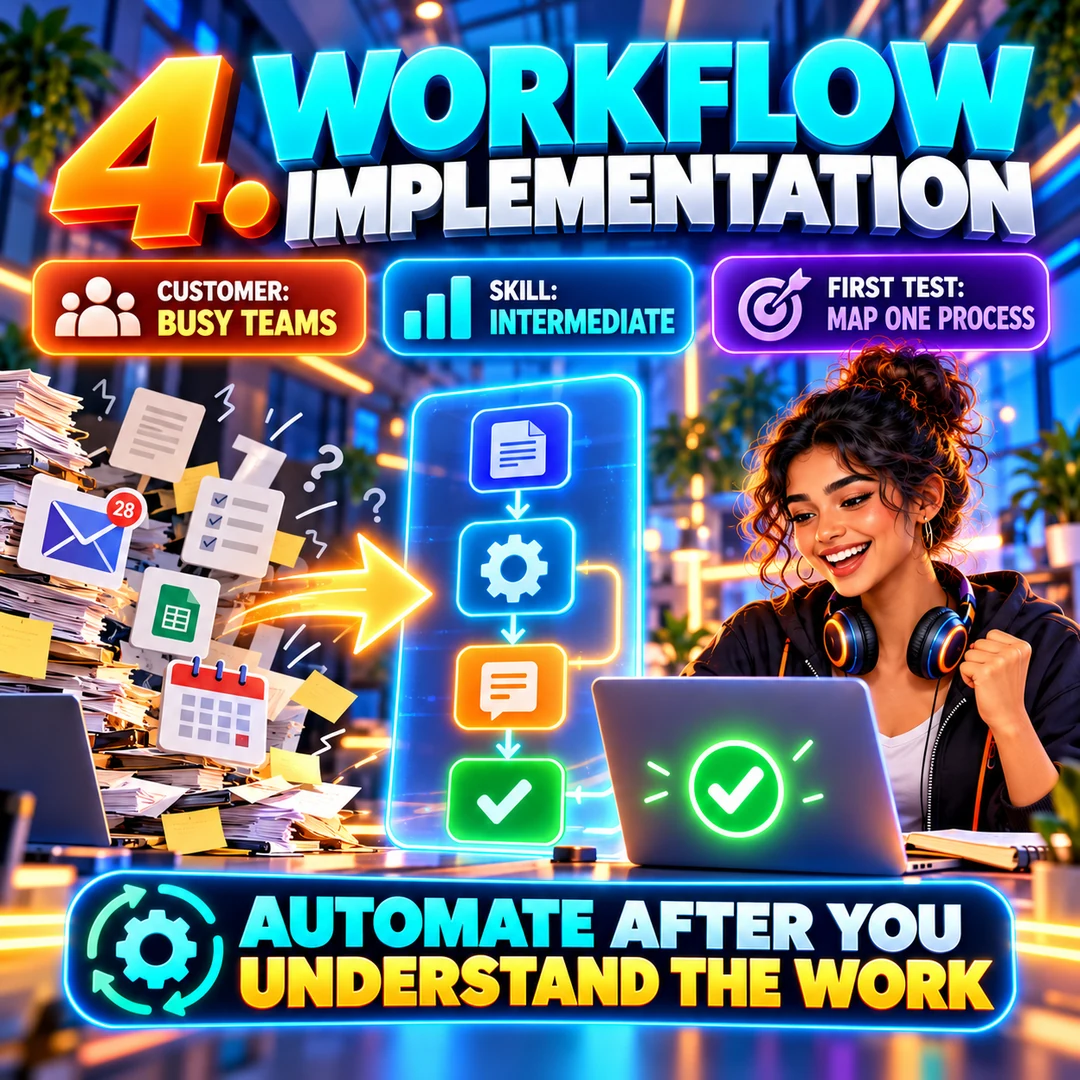
The Times of India reported on 6 October that Pune-based CurvetAI raised ₹6 crore in pre-seed funding led by Merak Ventures. Its workspace combines AI capabilities; agent-based workflow features are an area of further development.
Funding is a company milestone, not a reward scheme for users. For a small business, the more useful question is whether a tool reduces manual handoffs and produces reliable output.
Try this: map a repeatable task from brief to draft to review to approval. Test the available product against that workflow and keep a human approval step. Count time saved and corrections required, rather than the number of tools connected.
ElevenLabs: could you build an AI receptionist service?

In its 30 September announcement, ElevenLabs said a $300 million employee tender valued it at $22 billion. The company reported more than 15 million weekly agent conversations and technology spanning over 90 languages.
A practical service idea is an AI receptionist for a small business: answer routine questions, collect an inquiry and hand it to a person. For a US business, test English accents, opening hours, time zones and appointment rules with synthetic calls. Test other languages separately; a broad language count is not a quality guarantee.
Try this: use synthetic enquiries to demo one shop’s opening-hours and booking workflow. Include a clear AI disclosure and human handoff. Price model usage, calls, integrations and ongoing support before promising a fixed fee. Customer WhatsApp follow-ups require a separate, approved integration.
Mistral Large 4: preview now, weights later
Mistral’s 6 October announcement says the public preview API is available in Mistral Studio, with weights planned for the end of the month. A precise release date should be checked against the latest official update.
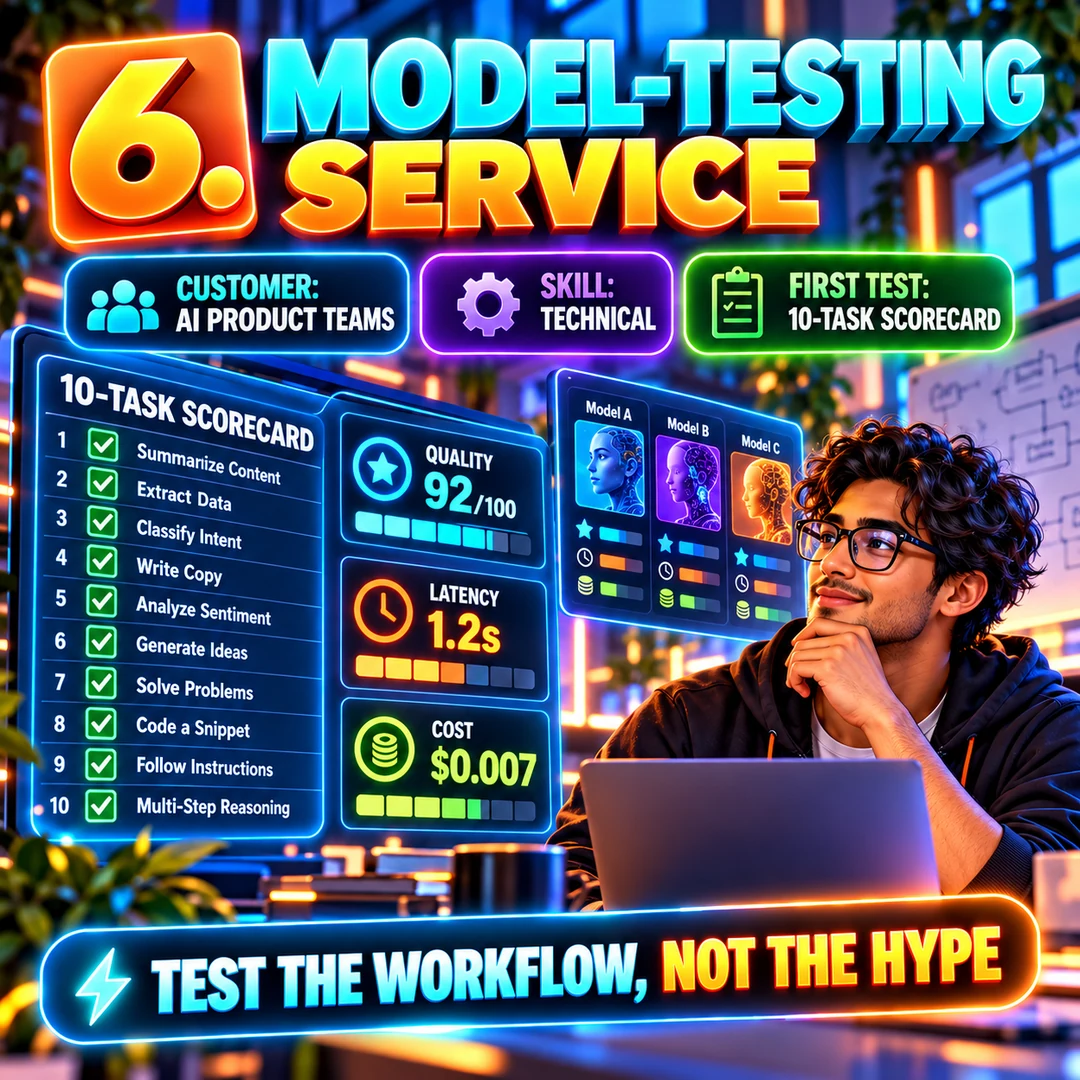
For a founder, the relevant test is how the model handles the task your users need—not which benchmark sounds most impressive.
Try this: build a small evaluation set for your intended workflow and compare quality, latency and total running costs. Review the applicable licence and data terms before deployment. An open-weight release is a deployment option, not proof of lower costs or a finished product.
Google Play Fest: 13–19 October, with eligibility to check
Google’s official Play Fest page lists 13–19 October and describes promotions, points boosts and competitions. Offers are subject to availability and promotional terms.
This does not guarantee featuring, installs or revenue for a new Android app. Any benefit from increased store activity is a hypothesis; India-specific offers and account eligibility need checking in the Play Store.
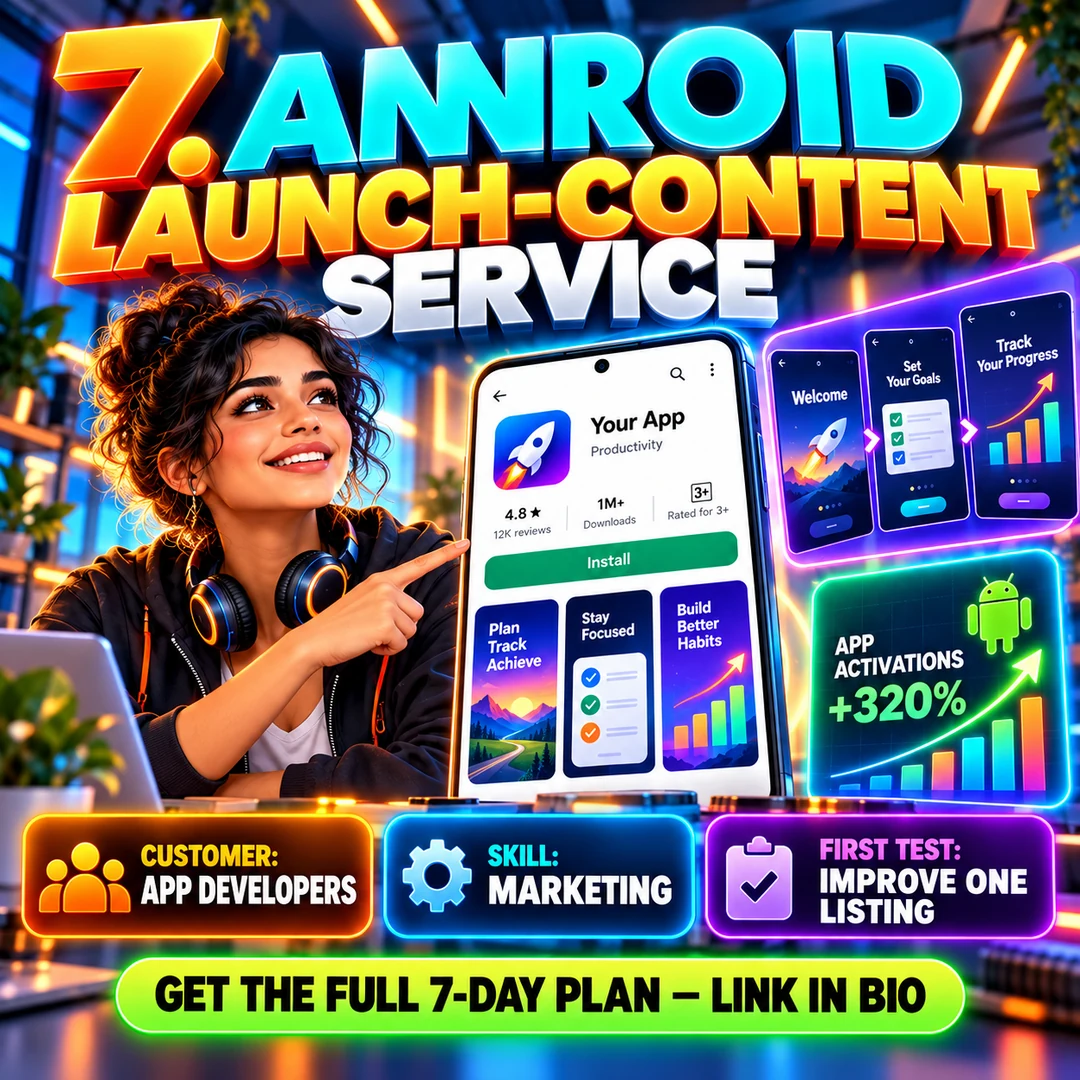
Try this: improve an already-tested app’s screenshots, onboarding and store copy. Prepare a small acquisition test with install-to-activation tracking. Do not rush an untested app to launch just to match an event date.
How to choose an AI tool or creator opportunity
- Define the output: a reviewed post, an answered inquiry or a working demo. Avoid choosing a tool only because it is trending.
- Check access and rights: supported countries, commercial use, payment methods, data handling and whether a free plan is sufficient.
- Run one small test: compare the result with your current workflow. Count corrections, time spent and total costs before offering the service to a customer.
For a realistic content workflow, see our worked content-calendar example for a service business. It shows how one customer question becomes several distinct posts.
A seven-day plan for your first experiment
- Days 1–2: choose one audience and one problem. Talk to three potential users before building.
- Days 3–4: create the smallest useful demo: an original story pilot, a content workflow or a synthetic-data voice assistant.
- Day 5: check platform eligibility, rights, licence terms and usage costs.
- Days 6–7: show the demo, record objections and ask whether the result is useful enough to pay for.
Estimate what one delivery costs you, including review time and support. Revenue only becomes a business when the service is useful, repeatable and affordable to deliver.
Questions about AI business ideas for creators and founders
What are the best AI business ideas for creators in 2026?
Start with a service you can personally review, such as short-form content production, content planning or organising repeated customer enquiries. Test one customer problem before paying for a large tool stack.
Can creators use these opportunities in the US or other countries?
This article does not establish immediate earning eligibility. Check each platform’s country access, payment methods, monetization requirements and current terms. Start with a small demand test.
Can I publish AI-generated comics on PopJoy?
Its current guidelines prohibit AI-generated images as comic art, covers and other uploaded visual content. Create original compliant artwork and review the full guidelines.
Are open-weight models always cheaper?
No. Compare hosting, model usage, engineering, review and support costs. Smaller models or a hosted API may fit a small workflow better.
What should a non-technical founder start with?
Begin with a task you understand and can review: content planning, short-form storytelling or organising business enquiries. Validate demand before building an automated service.
What is the best AI business to start in 2026?
For most beginners, the best AI business to start is a focused service that solves one repeated customer problem and keeps a human review step. Examples include content repurposing, enquiry organisation, workflow setup or an AI receptionist pilot. Choose a problem you already understand, demonstrate one useful result and test it with a real customer before buying a large tool stack.
What are the top 10 AI business ideas?
Ten practical AI business ideas to investigate in 2026 are:
- AI content repurposing service
- Vertical microdrama production
- Motion-comic production using original artwork
- AI workflow evaluation
- Workflow implementation for small teams
- AI receptionist setup with human handoff
- AI model-testing service
- Android app launch-content service
- AI website lead-qualification setup
- AI training and prompt-library service for a specific profession
The seven ideas examined above include customers, skill level, costs and a first test. The other three are adjacent opportunities to research with the same validation method. This list is not an income guarantee.
How can I earn money with AI in 2026?
Use AI to deliver a measurable service rather than selling vague access to a tool. Pick one customer problem, create a small demonstration, charge for a limited pilot and record the time, corrections and software costs. If the customer receives a useful result, turn the pilot into a setup fee, a recurring support plan or a clearly scoped project. Never promise automatic or passive income.
What are the latest AI trends in 2026?
The strongest business trends are AI agents handling multi-step workflows, multimodal creation across text, image, audio and video, model evaluation based on quality and cost, and stronger human oversight, security and governance. Google Cloud’s 2026 agent report emphasizes end-to-end workflows and workforce training; Microsoft’s 2026 Work Trend Index highlights human-agent collaboration; and OpenAI’s small-business analysis shows entrepreneurs using AI across planning, operations and growth. The opportunity is moving from isolated prompts to reliable, reviewed business systems.
Editorial note: this guide is reviewed as AI platforms and product details change. Platform details were checked on 7 October 2026 and the practical guidance was updated on 18 October 2026. Availability, pricing and terms can change. Company-reported figures are attributed above; suggested business experiments are Bharat Link-Up’s analysis. We have not tested or endorsed every product listed.