
Introduction
The AI Cold War between the United States and China is intensifying. American AI firm Anthropic has accused leading Chinese companies of using a technique called AI distillation to train their models on its chatbot, Claude. The allegation raises serious questions about intellectual property, AI safety guardrails, and global tech dominance. However, as the debate unfolds, it also exposes the complex ethics behind how AI systems are built worldwide. So, is this digital espionage—or simply the next phase of technological competition?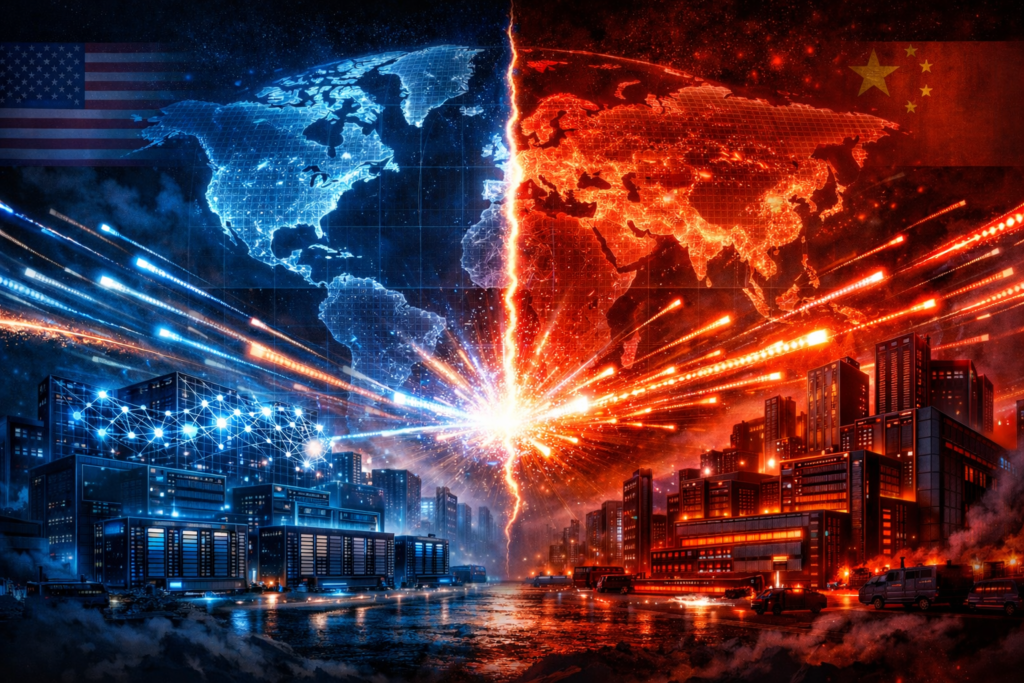
What Is AI Distillation—and Why Does It Matter?
At the heart of this controversy lies AI distillation, a common machine learning practice.
Let’s describes it with a simple analogy:
“Imagine there’s an exam and you haven’t studied for it. So, you sit next to the smartest kid in class. You ask them thousands of questions. You copy their answers and write your paper based on those answers.”
In AI terms:
A powerful model generates high-quality responses.
A smaller or less capable model studies those responses.
Over time, the smaller model learns to mimic the larger model’s behavior.
Importantly, distillation itself is not illegal. In fact, companies routinely use it internally to create faster and cheaper AI systems. The problem, according to Anthropic, arises when one company allegedly uses another company’s AI model to improve its own systems.
The Allegations Against Chinese AI Firms
Anthropic claims that three major Chinese AI players:
-
DeepSeek
-
MiniMax
-
Moonshot AI
created over 24,000 fake accounts and conducted more than 16 million exchanges with Claude.
Here’s the breakdown:
-
DeepSeek: ~150,000 exchanges focused on logic, alignment, and handling sensitive topics.
-
Moonshot AI: ~3.4 million exchanges aimed at advanced reasoning.
-
MiniMax: ~13 million exchanges, heavily focused on coding.
The twist? Claude is not officially available in China, raising further questions. Anthropic alleges that access was obtained via proxy servers.
Moreover, this isn’t the first such accusation. OpenAI previously claimed that Chinese firms were distilling outputs from ChatGPT to train competing systems.

The Bigger Concern: AI Safety Guardrails
According to U.S. AI companies, this controversy is not just about copying responses.
They argue that:
- American AI systems include built-in safety guardrails.
- These safeguards prevent misuse, cyberattacks, and malicious automation.
- If competitors distill only the outputs, they may replicate intelligence without the safety layers.
This, they claim, creates powerful AI systems stripped of protective mechanisms.
However, it is important to note that these are one-sided allegations. Chinese companies and Beijing have not formally responded.
Ethical Hypocrisy? The US Under Scrutiny
The debate becomes more complicated when examining American AI practices.
Critics argue:
US AI firms train on vast datasets scraped from the internet.
Much of this data includes copyrighted content.
Anthropic reportedly settled a $1.5 billion lawsuit over alleged misuse of copyrighted material last year.
Additionally, Elon Musk publicly accused Anthropic of “stealing data regularly.”
This raises an uncomfortable question:
If Western firms rely on scraped data to train AI, can they accuse others of unethical training methods?
Is Distillation Actually Illegal?
Legally, the issue remains unclear.
While distillation may violate a platform’s terms of service, whether it qualifies as intellectual property theft depends on:
Contract law interpretation
Copyright regulations
Future AI-specific legislation
Courts and regulators will ultimately determine whether cross-model distillation constitutes theft or fair use.
The Real Story: Control of AI Power
Ultimately, this controversy goes beyond distillation.
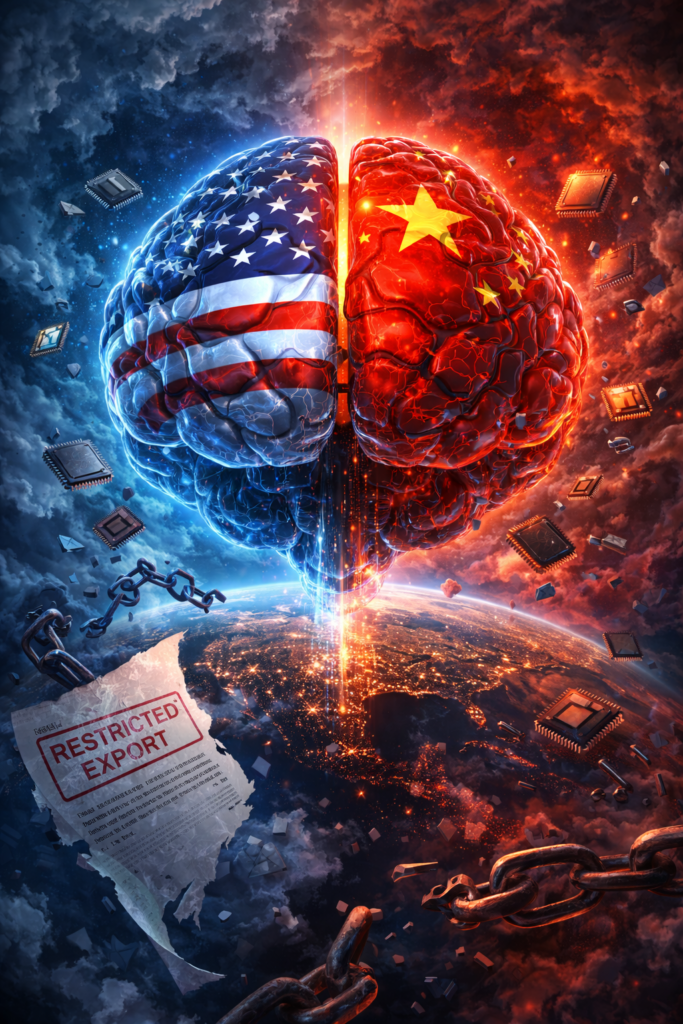
It reflects a broader struggle for control over the world’s most powerful emerging technology. The United States has:
Restricted advanced chip exports to China
Tightened technology controls
Accused competitors of unfair practices
Meanwhile, China continues to rapidly scale its AI capabilities.
This is not just a trade dispute—it resembles the opening phase of an AI Cold War.
In this race:
Whoever trains faster
Whoever scales smarter
Whoever controls the guardrails
may define the technological rules of the future.
As history shows, power rarely shifts quietly.
Conclusion: The First Skirmishes of an AI Cold War
The AI Cold War is no longer theoretical—it is unfolding in real time. Anthropic’s accusations against Chinese AI firms highlight the blurred lines between innovation, imitation, and intellectual property in the age of artificial intelligence.
Yet the debate also reveals deeper tensions about ethics, data ownership, and global power. As regulators weigh in and competition intensifies, one thing is certain: AI will not just shape the future of technology—it will shape geopolitics itself.
Want to stay ahead of global tech shifts? Subscribe for more insights on AI policy, innovation, and the evolving US-China tech rivalry.